


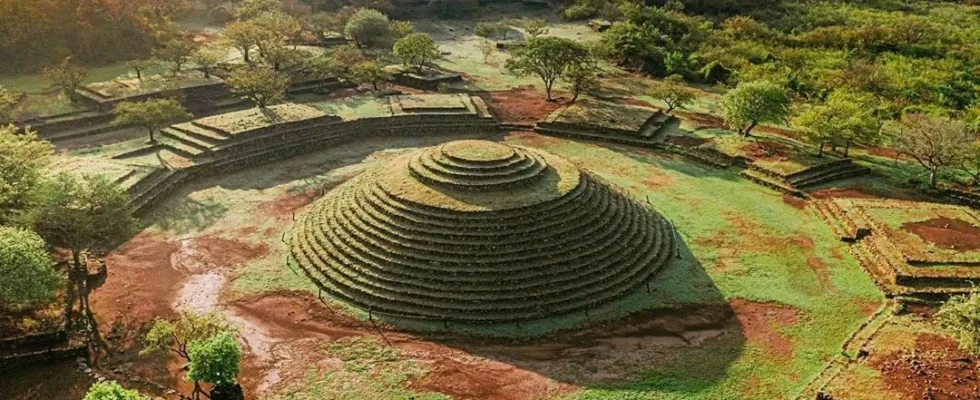
Until recently, admission to Guachimontones cost MXN $30. Since January 2026, INAH (Mexico’s National Institute of Anthropology and History) has included it on its list of free archaeological sites, so the only circular pyramid complex in the world open to the public no longer costs a single peso to enter. Getting to Teuchitlán still takes some effort, so here is everything you need: actual opening hours, how to get there without a car, what to eat, what else is nearby and an itinerary you can follow as is.
What are the Guachimontones?
Guachimontones is the colloquial name used in the region for the pyramids (the word comes from a local way of saying “pyramid” or “structure”), and it is also the name of the most important archaeological site in Jalisco, in the municipality of Teuchitlán, an hour from Guadalajara. This is where the so-called Teuchitlán culture settled, and it left behind something found nowhere else in Mesoamerica: circular pyramids, built as stepped tiers that rise in a spiral toward a central altar.
The full site covers 90 hectares (222 acres), although only 1.3% has been excavated. Archaeologists have identified 166 mounds, two ball courts, tombs and a network of terraces that reached as far as the neighboring town of El Refugio. The largest circle, the one that gives the site its name (“Guachimontón”), measures 127 meters (417 ft) in diameter, with a central mound 19 meters (62 ft) high. At its peak, archaeologists estimate that the area under this culture’s influence had around 40,000 inhabitants.
📍 Guachimontones quick facts: Location: Teuchitlán, Jalisco, 1 km (0.6 miles) northeast of town · Distance from Guadalajara: 55-65 km (34-40 miles), 55-90 min by car · Size: 90 hectares · UNESCO World Heritage Site: since July 12, 2006, as part of the Agave Landscape and Ancient Industrial Facilities of Tequila · Period of occupation: approx. 300 BC to AD 450-900.
History of Guachimontones and the Teuchitlán culture
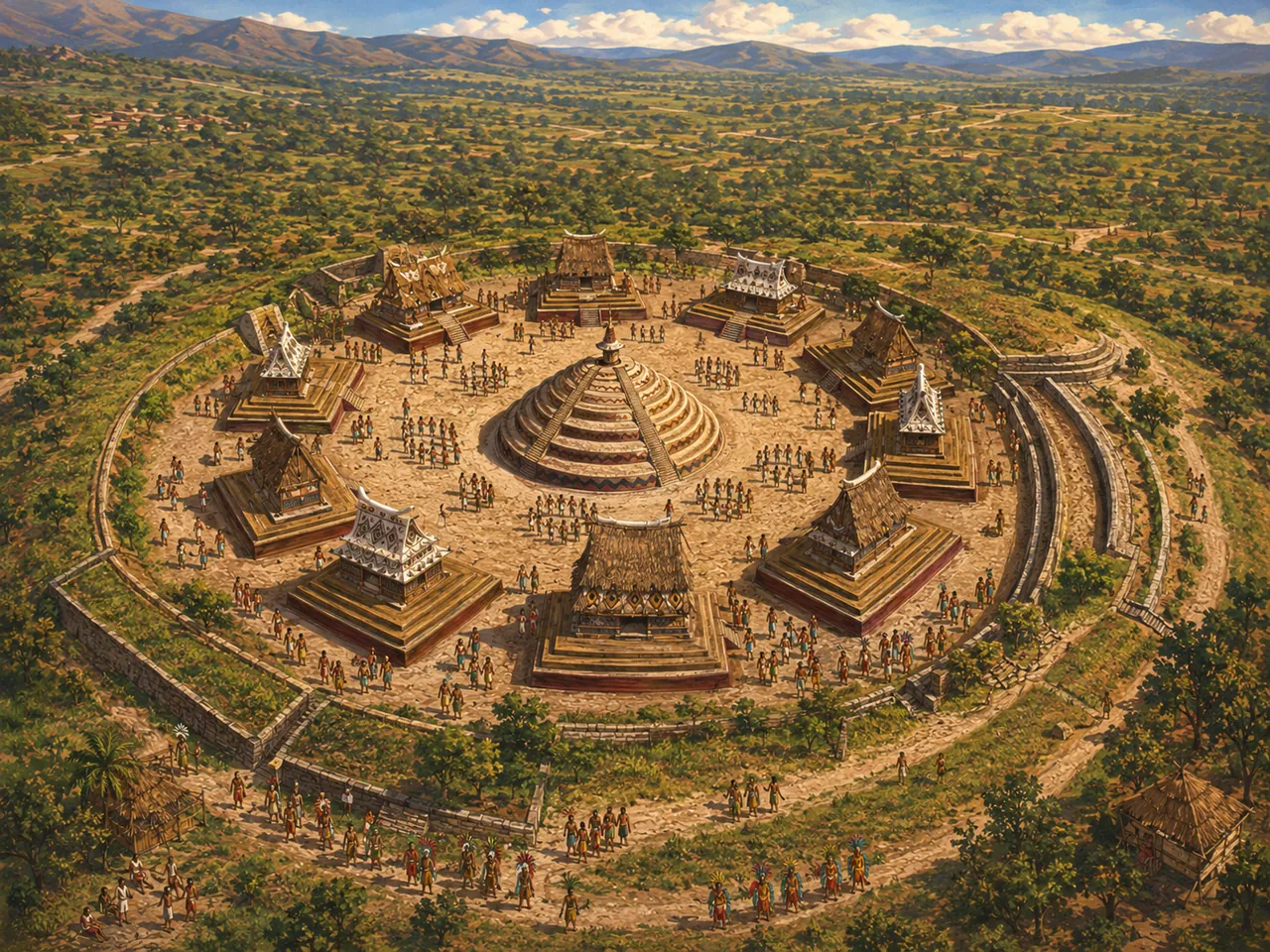
The so-called Teuchitlán Tradition developed between 300 BC and AD 450-500 (with later reoccupations), around the Tequila volcano. It was one of the most complex societies in western Mexico, with an economy based on growing corn, beans and squash and on trading obsidian, a volcanic glass used for tools and weapons as well as ceremonial objects. That obsidian traveled to other regions of Mesoamerica and brought back ideas, goods and contacts that enriched the local culture.
Society was organized in layers: an elite of shamans and priests who led ceremonial life, artisans and traders specialized in ceramics and obsidian, and farmers who sustained the agricultural base. That hierarchy is reflected in the architecture itself: each circle has a central pyramid surrounded by a raised patio, a circular bench and eight to sixteen rectangular platforms, some with burial crypts beneath them.
What were the circular pyramids used for?
There is no definitive answer. The most widely accepted theory is that the Guachimontones were built as ceremonial centers dedicated to Ehécatl, the wind god, and that rituals tied to the sun, the moon and the farming cycle were held there: harvests, fertility and funeral rites. The circular shape, sometimes described as a layer cake or a beehive, may represent that worldview, with the circle as a symbol of the cycle of life. The fact that the complex sits on a hilltop overlooking the valley also suggests it served as a ceremonial lookout over the entire city, something you can see for yourself today by walking up the site’s trail.
Around AD 900 the site was abandoned. Theories range from droughts that hurt crop production to internal conflict or pressure from outside groups. None of this is fully confirmed, and that is precisely part of the appeal of Guachimontones: to a large extent, it remains an unsolved mystery.
Rediscovery and protection of the site
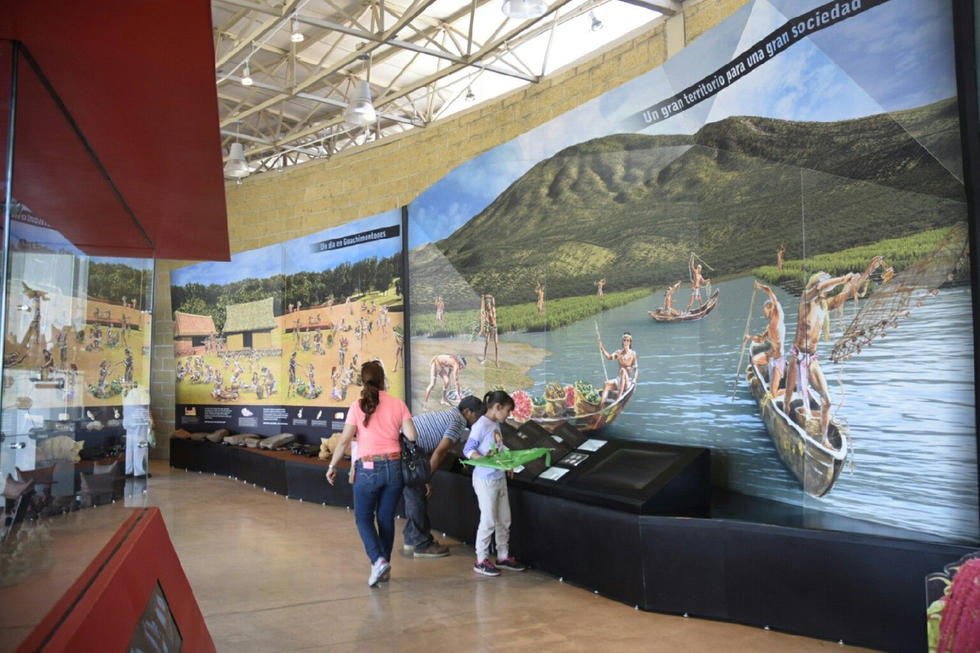
Although the mounds were always visible, formal excavations began in the 1970s and 1980s, led by archaeologist Phil Weigand, who devoted much of his career to documenting the Teuchitlán Tradition. The site museum is named in his honor: the “Phil Weigand” Interpretive Center. Guachimontones was declared a Historic Monument and, in 2006, UNESCO included it as part of the Agave Landscape and Ancient Industrial Facilities of Tequila, the same designation that protects the region’s agave fields and tequila distilleries.
Guachimontones hours and admission in 2026
Guachimontones is open Thursday to Sunday, from 9:00 a.m. to 5:00 p.m., and admission is free. This changed in January 2026: previously it was open Tuesday to Sunday and admission cost MXN $30 (MXN $15 for teachers and students, free for children under 12, seniors and people with disabilities).
🕐 Updated Guachimontones hours and admission (2026): Thursday to Sunday, 9:00 a.m. to 5:00 p.m. · Admission: FREE (according to INAH’s official listing) · Closed Monday, Tuesday and Wednesday · The Phil Weigand Interpretive Center may keep slightly different hours from the archaeological zone, so if you want to see the museum, do not arrive after 4:00 p.m. · These rates do not include third-party charges (state or municipal governments or community groups that run parking or other services).
Because policies like this can change again, if your visit is coming up soon, confirm the current hours on the Guachimontones Interpretive Center’s social media before you leave.
How to get to Guachimontones from Guadalajara
There are three ways to get to Guachimontones, and each suits a different kind of traveler.
By private or rental car
From downtown Guadalajara, take federal highway 15 toward Nogales (the Guadalajara–Ameca road) and, at kilometer 46, turn toward Tala–Teuchitlán on state highway 27; you can also take Mexico 70 directly. The drive is 55 to 65 km (34 to 40 miles) and takes 55 minutes to an hour and a half, depending on traffic leaving the city. In Teuchitlán, follow Hilarión Romero Gil, Zaragoza and Benito Juárez streets to the entrance of the archaeological zone, where there is parking. If you do not have a car, GDLgo has a guide to the best car rental companies in Guadalajara.
By public transportation
This is the cheapest option and the one least clearly explained elsewhere. Go to Guadalajara’s Central Camionera Vieja (old bus terminal) and look for the Autotransportes Etzatlán line, which has departures to Teuchitlán every 20-30 minutes. The ticket costs around MXN $75 to $85 and the ride takes about an hour, though it is wise to allow a bit more for stops and traffic leaving the city. At the Teuchitlán bus station you will find a taxi stand right outside: from there to the archaeological zone is 10 to 15 minutes and costs roughly MXN $60 to $70, because the last stretch to the entrance has to be done on foot or by taxi; no bus goes directly to the gate. Ask the driver for a phone number so they can pick you up when you are done, especially outside the high season, when fewer cars are around.
On an organized tour
If you would rather not deal with logistics, there are half-day and full-day tours departing from Guadalajara hotels, with transportation and a guide included, for MXN $700 to $1,200 per person. A variety of Guadalajara tour operators, such as Rapivan or GDL Adventures, offer this destination. Several of these tours combine Guachimontones with a visit to a tequila distillery including a tasting, or even with a ride on the José Cuervo Express train, which runs from Guadalajara to the town of Tequila. It is the most convenient option if you are short on time and want to see the Tequila Route the same day.
📖 Related articles: Public transportation in Guadalajara — getting around the city before heading to Teuchitlán | How to get to Guadalajara — if your trip starts outside Jalisco
What to see inside the Guachimontones archaeological zone
The route is marked with arrows on the ground and information signs next to the most important structures, so it is easy to explore on your own. Do not miss:
- Circle 2, or “Guachimontón”: the structure that gives the site its name, 127 meters in diameter with a central mound 19 meters high. It is the visual heart of the visit and the most photographed spot.
- The ball courts: the site has two courts linked to the ceremonial complex, long and flanked by sloped walls, different from those of other Mesoamerican cultures.
- The rectangular platforms: around each circle are eight to sixteen platforms where the religious and political elite lived; burial crypts have been found beneath some of them.
- The trail to the lookout: a short climb that takes you to the top of the hill, with panoramic views of the Teuchitlán valley, the town and, on clear days, the Presa de la Vega reservoir.
- “Phil Weigand” Interpretive Museum: it has scale models, original pieces, a mural of the site and activities for kids. Visit it before you go into the ruins so you arrive with context; if you go late, it may already be closed by the time you finish the outdoor route.
Certified guides are available at the entrance for those who prefer a live, explained tour; they have no published fixed rate, so ask and agree on the price before you start.
How much time you need and the best time to go
Plan on two to three hours: two to walk the entire archaeological zone at an easy pace, plus 30 to 45 minutes for the museum. Since the site is open only Thursday to Sunday, arriving early (right at the 9:00 a.m. opening) helps you avoid the midday heat and leaves plenty of time for the museum before it closes.
The rainy season (June to October) turns the grass a deep green, ideal for photos, but it also brings more humidity and the occasional afternoon shower. The dry season (November to May) has golden grass and clearer skies, although the sun is stronger. Every spring, the Interpretive Center also holds a Cultural Week that ends on March 21, coinciding with the spring equinox, with special activities; if that date appeals to you, confirm the current program with the center before you go, since these events depend on local conditions each year.
What to eat at Guachimontones and in Teuchitlán
Inside the complex there is a restaurant specializing in pre-Hispanic food with a view of the valley. But if you want something cheaper and tasty, just before the entrance is Restaurante Mayahuel, a simple spot with a very Mexican feel where quesadillas cost about MXN $35 and gorditas (thick stuffed corn cakes), especially the chorizo ones, about MXN $40; for what is practically the only option near the entrance, it is a pleasant surprise.
If you extend your day to the Presa de la Vega, the restaurant area there is known for frog legs, an unusual dish that has become the region’s specialty, and for lake views while you eat.
More things to do near Guachimontones
There is more to Teuchitlán than the archaeological zone. If you have a full day, here is what you can combine. In fact, Teuchitlán and Guachimontones are a key stop on the Tequila Route, the eight-municipality circuit that links this site with Tequila, Amatitán and the rest of the agave landscape; if you want to plan a multi-day trip, that guide has the full map.
- Presa de la Vega: a reservoir of nearly 2,000 hectares (4,900 acres), recognized as a Ramsar site (a wetland of international importance) since 2010. You can fish for carp, tilapia, bass and catfish, rent a kayak or go horseback riding, and it is a well-known spot for watching migratory birds.
- Tequila Volcano: visible from several points at the archaeological site, it is a popular hiking destination in the region.
- Tequila, Pueblo Mágico: 30-45 minutes from Teuchitlán, this officially designated “Magic Town” can be reached by car or combined in a tour that includes the José Cuervo Express train from Guadalajara.
- Etzatlán: the neighboring town, served by the bus line of the same name that connects with Guadalajara, with its own water parks and crafts.
📖 Related articles: Visiting Rancho Los Tres Potrillos — another getaway along the agave route near Guadalajara | Glamping near Guadalajara — if you want to spend the night in nature after your visit
Where to stay near Guachimontones
Most people visit Guachimontones as a day trip from Guadalajara and go back to the city to sleep; if that is your plan, see our guides to where to stay in Guadalajara and the best boutique hotels in Guadalajara.
If you prefer to stay in the area and take your time, there are a couple of haciendas turned hotels 10-15 minutes from the site: Hacienda El Carmen Hotel & Spa, with historic spaces, organic food, bike and horseback rides and a lake with pedal boats; and Hacienda Labor de Rivera Hotel Boutique, colonial in style, with a spa, equine therapy and kayaking on its own private lake. Since availability and services at hotels like these change often, confirm directly with each hacienda before booking.
Suggested itinerary for visiting Guachimontones
Half day, Guachimontones only: leave Guadalajara at 7:30-8:00 a.m., arrive at opening time (9:00), explore the museum and archaeological zone at an easy pace until noon, eat at Restaurante Mayahuel and head back to the city by mid-afternoon.
Full day, Guachimontones + Tequila: same early start, visit the archaeological site in the morning, eat nearby and continue to the town of Tequila to tour a distillery and do a tasting before returning to Guadalajara at sunset. This is exactly the combination most organized tours offer, so if you do not have a car, this is the easiest route to book as a package.
Relaxed weekend: spend one night at one of the haciendas near Teuchitlán, devote the first morning to Guachimontones and the afternoon to the Presa de la Vega (kayaking, fishing or simply eating frog legs with a lake view), and the second day to Tequila or the Tequila Volcano if you like hiking.
What to bring and practical tips for your visit
- Sunscreen and a cap or hat: the route is outdoors, with no shade for much of the way, and the average temperature is around 25°C (77°F).
- Sneakers with good soles: the ground is dirt and grass, with slopes on the trail to the lookout; the site is not suited to wheelchairs or dress shoes.
- Water and some cash: there are few ATMs, and cards are not always accepted, especially at stands or small businesses in town.
- Respect the site: climbing the structures outside designated areas and touching or removing stones are not allowed; it is protected by INAH and is a World Heritage Site.
- If you go during the rainy season, bring a light rain jacket; afternoons often end with short showers.
Guachimontones FAQ
How much does it cost to enter Guachimontones?
According to INAH’s official listing, updated in January 2026, admission is free. Before this change, it cost MXN $30 general admission and MXN $15 for teachers and students.
What days is Guachimontones open?
Thursday to Sunday, from 9:00 a.m. to 5:00 p.m. It is closed Monday, Tuesday and Wednesday.
How long does it take to get from Guadalajara to Guachimontones?
Between 55 minutes and an hour and a half by car, depending on traffic leaving the city; by bus plus taxi, allow about an hour and a half to two hours in total.
Can you get to Guachimontones without a car?
Yes. Autotransportes Etzatlán leaves Guadalajara’s Central Camionera Vieja every 20-30 minutes for Teuchitlán, and from there a taxi drops you at the entrance. You can also book an organized tour with transportation included.
How much time do you need to visit Guachimontones?
Two to three hours if you include the interpretive museum and the trail to the lookout.
What exactly are the circular pyramids of Guachimontones?
They are stepped pyramid structures with a circular base, unique in Mesoamerica, made up of a central pyramid surrounded by a raised patio, a bench and several rectangular platforms. They are believed to have been ceremonial centers dedicated to Ehécatl, the wind god.
Is Guachimontones a World Heritage Site?
Yes, since July 12, 2006, as part of the Agave Landscape and Ancient Industrial Facilities of Tequila, a designation granted by UNESCO.
Can you combine a visit to Guachimontones with Tequila?
Yes, it is one of the most common combinations: several organized tours include Guachimontones in the morning and a tequila distillery with a tasting in the afternoon, or a ride on the José Cuervo Express train.
Are there places to eat near Guachimontones?
Yes. The site has its own pre-Hispanic food restaurant, and just before the entrance is Restaurante Mayahuel, with affordable quesadillas and gorditas. If you extend your day to the Presa de la Vega, the local specialty there is frog legs.
📖 Keep exploring: Essential Guadalajara travel information | Museums in Guadalajara | The 10 best restaurants in Guadalajara | 10 beautiful places to see in Guadalajara