


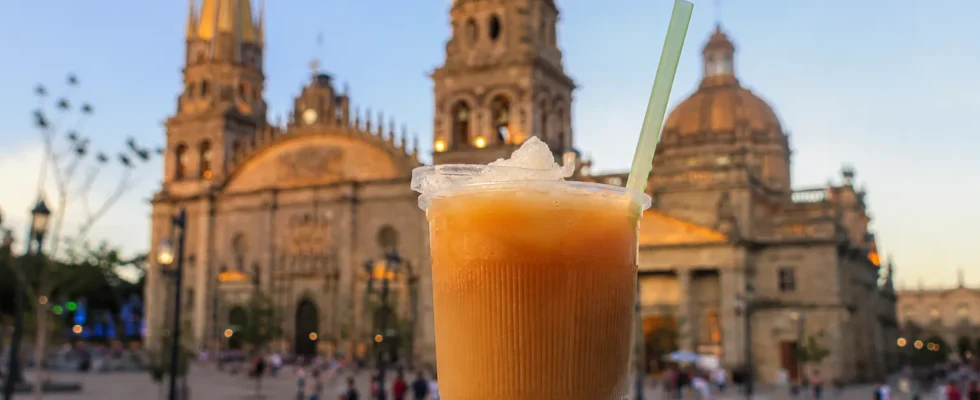
If you have walked around Guadalajara on a hot day, you have probably heard the call: “¡teeejuinooo!”. It is the sound of a cart with a cooler, a vendor pouring into plastic cups and a line of locals waiting for their dose of fermented corn with lime, salt and a scoop of sorbet on top. Tejuino was not born in Guadalajara (it is a pre-Hispanic drink from western Mexico), but no other city drinks it with the devotion you see here. This guide explains exactly what it is, how to order it like a local and, above all, the best places to drink tejuino in Guadalajara, with addresses.
📌 Tejuino in 20 seconds: Fermented corn drink (nixtamal masa, the same dough used for tortillas) sweetened with piloncillo (unrefined cane sugar) · Sweet-and-sour, slightly tangy flavor · Served cold, with lime, salt and lime sorbet · Typical price: MXN $20-$40 per cup · Perfect for hot weather · Guadalajara celebrates Municipal Tejuino Day every March 19 · Mostly consumed in Jalisco, Nayarit, Colima and Oaxaca.
What is tejuino?
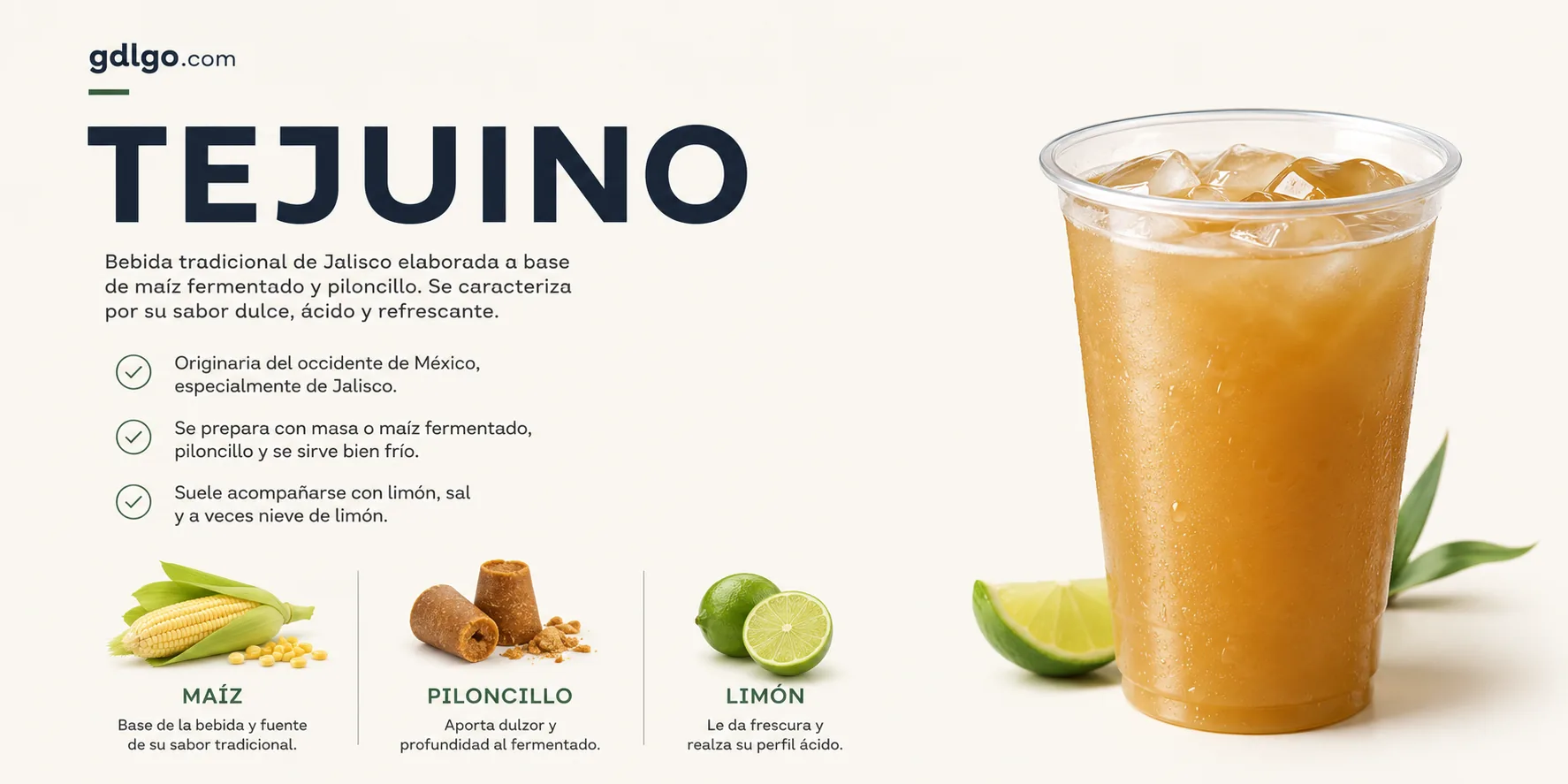
Tejuino is a drink made from fermented corn. The traditional recipe starts with the same nixtamal masa used for tortillas: it is dissolved in water with piloncillo, boiled for hours until it becomes a kind of atole (a thick corn drink) and then left to ferment for a couple of days. That process gives it its character: a sweet-and-sour flavor with a light tang that makes it refreshing.
The name comes from the Nahuatl word tecuín, which translates as “to beat” or “the heart pounding,” a reference to the bubbling of fermentation. Its origins are pre-Hispanic: the Wixáritari (Huichol people) prepared a ceremonial corn drink, sometimes called nawa, to honor their ancestors. Over the centuries the custom spread across western Mexico and found its home in Jalisco, and especially in Guadalajara.
Why tejuino is Guadalajara’s most typical drink
Jalisco is a land of iconic drinks (tequila and mezcal carry the international fame), but tejuino is the everyday drink of Guadalajara. You do not drink it at a tasting or at a bar: you drink it on the street, from a plastic cup, on your way out of the market or after work. It is cheap, it is cold and it is on every corner when the heat sets in. That everyday quality is exactly what makes it so local.
The city officially claims it as its own: Guadalajara established Municipal Tejuino Day, celebrated every March 19, with activities around the drink and its traditional vendors, many of whom have kept their stands in the same spot for more than half a century. For visitors, trying a tejuino is as much a part of Guadalajara as visiting the La Minerva roundabout or walking through the Guadalajara Historic Center.
📖 More Guadalajara flavors: Carne en su jugo — Guadalajara’s most local dish | The best tacos in Guadalajara | The Tequila Route — Jalisco’s other great drink
How to order a tejuino like a local
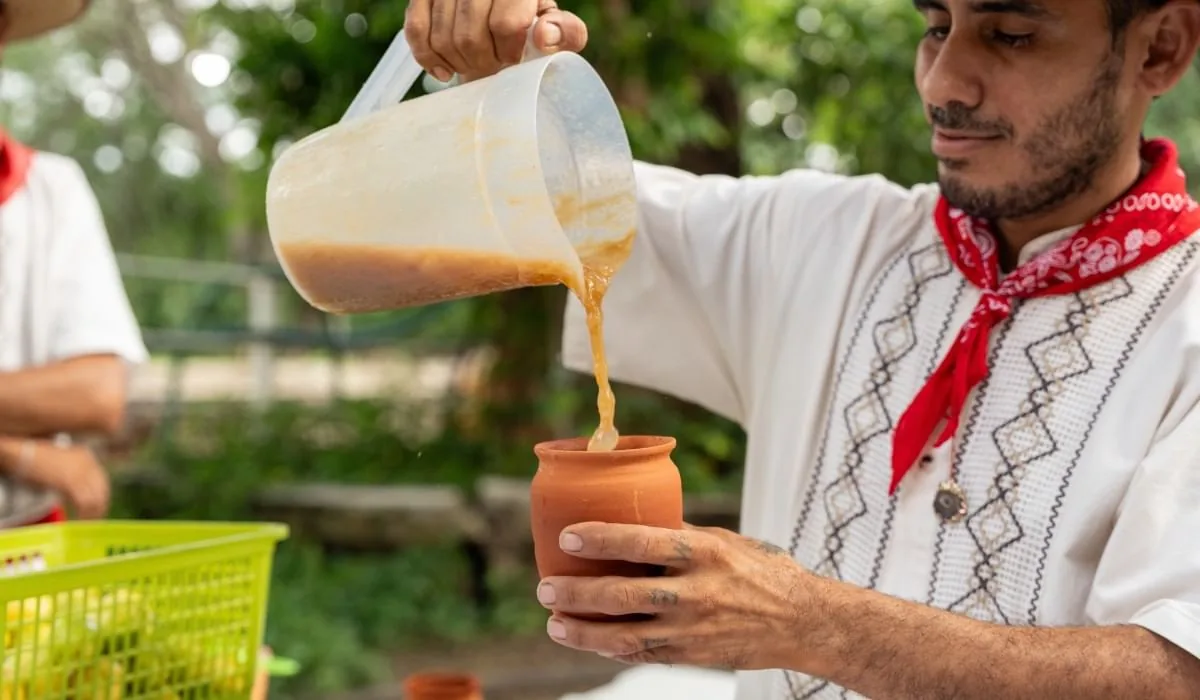
Tejuino is served cold and almost always “preparado” (dressed up). The standard order comes with lime and salt and is topped with a scoop of lime sorbet that slowly melts into the cup; that mix of sweet fermented corn and icy tartness is the whole point. If you want it plainer, ask for it “solo.” And if they offer it “con todo” (with everything), now you know what that means.
- Traditional tejuino: with lime, salt and lime sorbet; some people add a little chile. The classic.
- Tejuino preparado: some stands load it up with chamoy (a tangy chile-fruit sauce), chile powder, tamarind or even snacks on top.
- Chejuino or tejichuela: tejuino with beer, the “michelada” version of the drink. It is not for everyone, but it has a following in the city.
- By the liter to go: several stands sell it by the liter to take home; ideal if you are serving the whole family.
The best places to drink tejuino in Guadalajara
We gathered the city’s best-rated tejuino stands and shops, from classics more than 50 years old to neighborhood favorites. Many are carts or small storefronts, so hours vary and it is best to go during the day. These are the best options for tejuino in Guadalajara:
1. Tejuino Marcelino: the classic (since 1955)
The oldest on the list and a Guadalajara institution. Don Marcelino has been making tejuino the traditional way since 1955, and his stand is still a must for purists. If you only try one, make it this one.
📍 Calle Joaquín Angulo 819, colonia Artesanos, Centro.
2. Tejuinos El Güero: the viral one (since 1971)
In Arboledas, El Güero became a social media sensation for its full-flavored tejuino and generous toppings. There is almost always a line, but people swear it is worth it.
📍 Calle Virgen, corner of Copérnico, colonia Arboledas.
3. Tejuinos San Onofre: for the adventurous
Right downtown, San Onofre is the place to go beyond tradition: tejuinos dressed with chile, snacks on top and combinations you will not find anywhere else. They also serve regular tejuino for those with classic tastes.
📍 Calle Juan Manuel 1, Zona Centro.
4. Tejuino y Nieve Ureña
One of the best rated on Google Maps, with freshly made nieve de garrafa (hand-churned sorbet) on the side. It is downtown, near Barranquitas, an area of markets and street food.
📍 Calle Liceo, local 7, colonia Centro Barranquitas.
5. Tejuinos El Zaus
A neighborhood favorite in colonia El Sauz, on the east side of the city. It consistently shows up among the best stops on Guadalajara’s tejuino route.
📍 Calle Isla Zanzíbar 4193, colonia El Sauz.
6. Tejuino Belén
In colonia Progreso, another stand that locals rate highly for straightforward, classic tejuino.
📍 Calle República 2152, colonia Progreso.
7. Tejuinos y Nieve de Garrafa La Providencia (Zapopan)
If you are around downtown Zapopan, this spot serves the classic tejuino with its scoop of lime sorbet, plus a good selection of hand-churned sorbets.
📍 Calle Emiliano Zapata 249, Zapopan Centro.
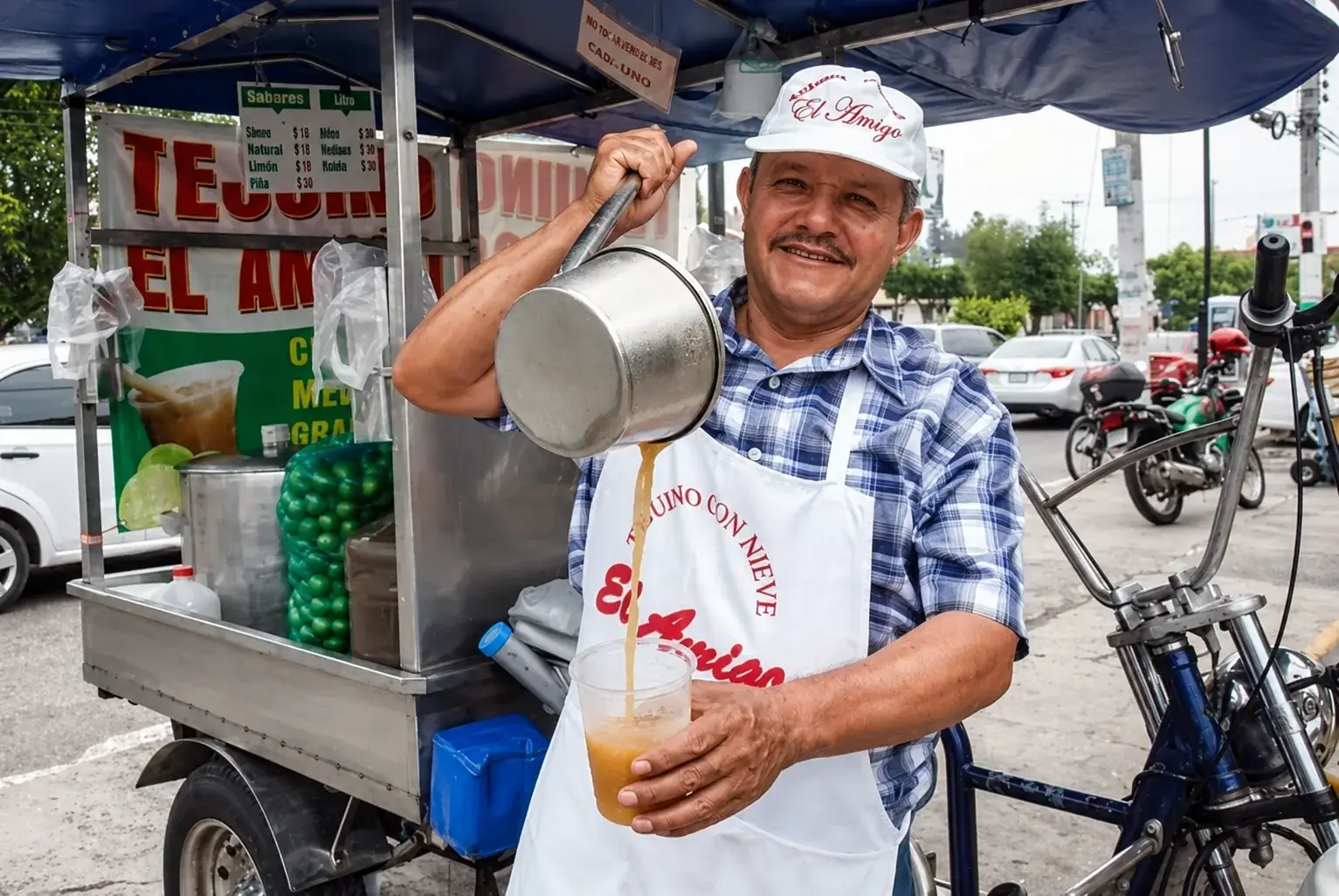
8. Tejuinos El Amigo: by the liter
Known for serving tejuino by the liter alongside papas preparadas (chips loaded with sauces and toppings). A good choice if you are taking some to share.
📍 Av. Conchita 4199, local 22, colonia Loma Bonita Ejidal.
9. Tejuinos Charly
Downtown on López Cotilla, known for its good pairing of tejuino with lime or strawberry sorbet. Convenient if you are exploring the heart of the city.
📍 Calle López Cotilla, Centro.
10. Tejuino El Venadito
A family classic in colonia Olímpica, with good service and a neighborhood feel. It has customers who have been loyal for years.
📍 Av. Mariano Otero 2355, colonia Olímpica.
11. Mercado San Juan de Dios (Mercado Libertad)
The Mercado San Juan de Dios, the largest indoor market in Latin America, is also a reliable place for tejuino: several stalls serve it in its most traditional form, each with its own touch. Ideal to combine with a walk around the Historic Center.
📍 Calz. Independencia Sur 52, Centro.
📖 Related article: Mercado San Juan de Dios — a practical guide: how each level is organized, what to eat, what to buy and how to get there.
12. El Baratillo: street-market tejuino
If you are in town on a Sunday, the city’s largest tianguis (open-air street market) is tejuino in its purest form: on the street, between stalls, with the sorbet melting in the heat. A 100% Guadalajara experience.
📍 Colonia El Baratillo (Sundays only).
📷 Tips for your tejuino route: Most are carts or small shops that open during the day and close when they sell out; go early or in mid-afternoon. · Almost everything is cash only, so bring change. · If you are watching your sugar, ask for it “sin nieve” (no sorbet) or with just a little. · At markets and street markets, choose the busiest stand: high turnover means fresher tejuino.
How much does tejuino cost in Guadalajara?
It is one of the cheapest drinks in the city. A cup runs about MXN $20 to $40 depending on size and toppings, and a liter to go usually costs MXN $50 to $80. Prices go up a bit in tourist areas and for versions “con todo,” but it is still one of the cheapest things you will try in Guadalajara.
Is tejuino good for you? Its properties
When it is well made and hygienic, tejuino has a reputation as a healthy drink. Because it is fermented corn, it works as a natural probiotic that helps gut flora, and it is traditionally said to beat the heat and even ease a hangover. It has far less sugar than a soda: according to figures from Sader (Mexico’s agriculture ministry), tejuino has around 60-80 grams of sugar per liter, compared with up to 300 grams in a cola. As with any street-stand drink, though, it is best to have it at clean places with high turnover.
Tejuino FAQ
Does tejuino have alcohol?
Almost none. Commercial tejuino has a short fermentation, so its alcohol content is minimal or zero, and it is considered suitable for all ages. “Chejuino” is a different story, since it contains beer. The ceremonial Huichol version, fermented for longer, can contain alcohol.
What does tejuino taste like?
Like fermented corn: sweet-and-sour, slightly tangy, and some people notice a light fizz. Served with lime, salt, chile and lime sorbet, the result is refreshing and quite addictive, especially in hot weather.
What is tejuino made of?
Corn masa (nixtamal) dissolved in water with piloncillo, boiled and then fermented for one or two days. When served, it gets lime, salt, chile piquín and, optionally, lime sorbet.
Where can I get the best tejuino in Guadalajara?
Among the best rated are Tejuino Marcelino (Artesanos, since 1955), Tejuinos El Güero (Arboledas), Tejuinos San Onofre (Centro), Tejuino y Nieve Ureña (Centro Barranquitas) and the stalls at the Mercado San Juan de Dios. The full list with addresses is above.
Why is tejuino typical of Guadalajara if it is pre-Hispanic?
Because, although it originated with the peoples of western Mexico (the Wixáritari), Guadalajara is where it became an everyday drink and part of street culture. The city even dedicates an official day to it, March 19, and is home to some of the oldest and best-known tejuino vendors in the country.
📖 Keep discovering Guadalajara: Essential Guadalajara travel information | Things to do in Tequila, Jalisco | 7 things to do in Tlaquepaque | 10 beautiful places you should see