


The Basilica of Zapopan is the most important Marian shrine in Jalisco and one of the religious sites with the greatest historical and spiritual weight in all of Mexico. It is home to the revered Virgin of Zapopan, affectionately known as “La Zapopanita,” and this colonial Baroque landmark draws millions of worshippers, tourists and researchers who come to Guadalajara from around the world every year. If you plan to visit Zapopan, seeing its basilica is not optional: it is the heart of the city.
History of the Basilica of Zapopan: From Chapel to National Shrine
The history of the Basilica of Zapopan begins in the 16th century, when Franciscan friars came from Michoacán to what was then called Nueva Galicia to evangelize the region’s Indigenous peoples. They brought with them a small image of the Virgin of the Immaculate Conception, made from corn stalk and wood by Purépecha artisans: the same image venerated today as La Zapopanita.
According to tradition, Friar Antonio de Segovia climbed Cerro Mixtón carrying the image to pacify the Indigenous people who were resisting evangelization. At that moment, a halo of light shone from the figure, and the natives gave up their resistance. In gratitude, Friar Antonio left the image with the local people, who built a small chapel in its honor. That was the origin of the devotion to the Virgin of Zapopan.
In 1609, an earthquake brought down the original chapel. The image of the Virgin was the only thing left intact in the rubble, which the faithful took as La Zapopanita’s first great miracle. In response, it was decided to build a sturdier, more fitting shrine. Construction began in 1690 and was completed in 1730, giving rise to the building we see today. In 1940, Pope Pius XII elevated the shrine to the rank of Minor Basilica, a distinction that recognizes its exceptional spiritual importance.
ℹ️ Historical note: The Basilica of Zapopan was elevated to Minor Basilica by Pope Pius XII in 1940. The current building dates from 1690 to 1730 and was built by Franciscan friars.
The Virgin of Zapopan (La Zapopanita): History and Meaning
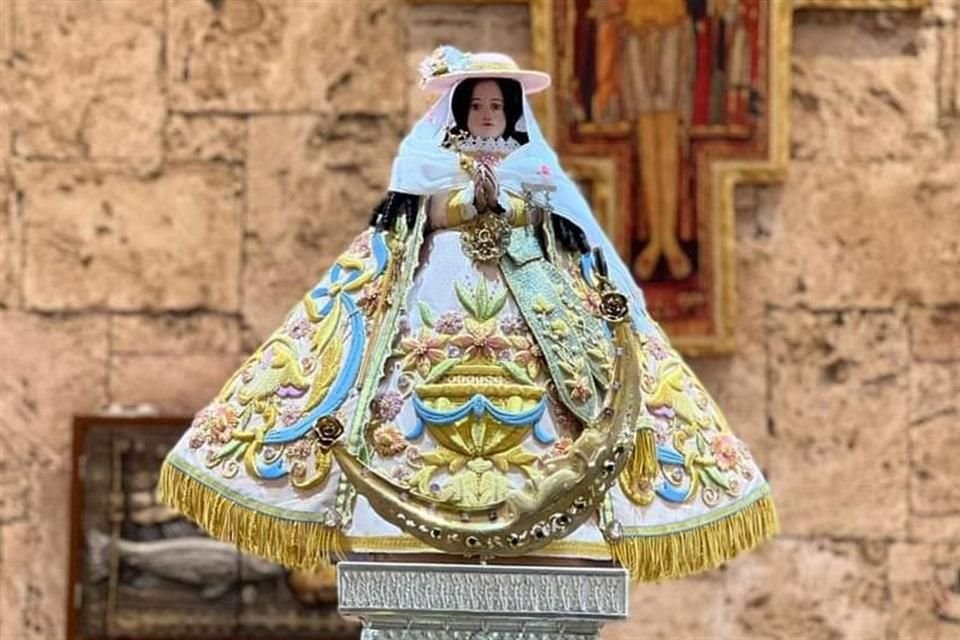
The image of the Virgin of Zapopan, whom locals affectionately call La Zapopanita, is only 34 centimeters (13 inches) tall, but her influence is immeasurable. She was made between 1560 and 1570 using an Indigenous technique: hollow corn stalk and wood paste, materials the region’s artisans used for religious sculpture. Her garments are the work of local embroiderers and are renewed periodically as a devotional offering.
Every element of La Zapopanita’s attire has a specific meaning. The sash across her chest and the sword refer to her title of General of the Mexican Armies, a military distinction granted for having “intervened” in historic battles in the region. The reliquary at her womb links her to motherhood and the protection of life. The scepter affirms her title of Queen, and in her hands she holds the symbolic keys to the cities of Zapopan and Guadalajara.
Many miracles have been attributed to La Zapopanita over the centuries: surviving the 1609 collapse intact, restoring sight to a boy born blind, stopping the smallpox and typhus epidemics that ravaged Guadalajara and easing periods of extreme drought. This reputation for miracles, especially in matters of health and natural disasters, explains the massive devotion she inspires to this day.
The Basilica’s Architecture: Colonial Baroque at Its Finest
The Basilica of Zapopan is one of the most representative works of Mexican colonial Baroque in the west of the country. Its main facade stands out for the symmetry of its two bell towers, its richly decorated portal and its expressive use of carved cantera stone. The building has a Latin cross floor plan, with three naves leading to the main altar.
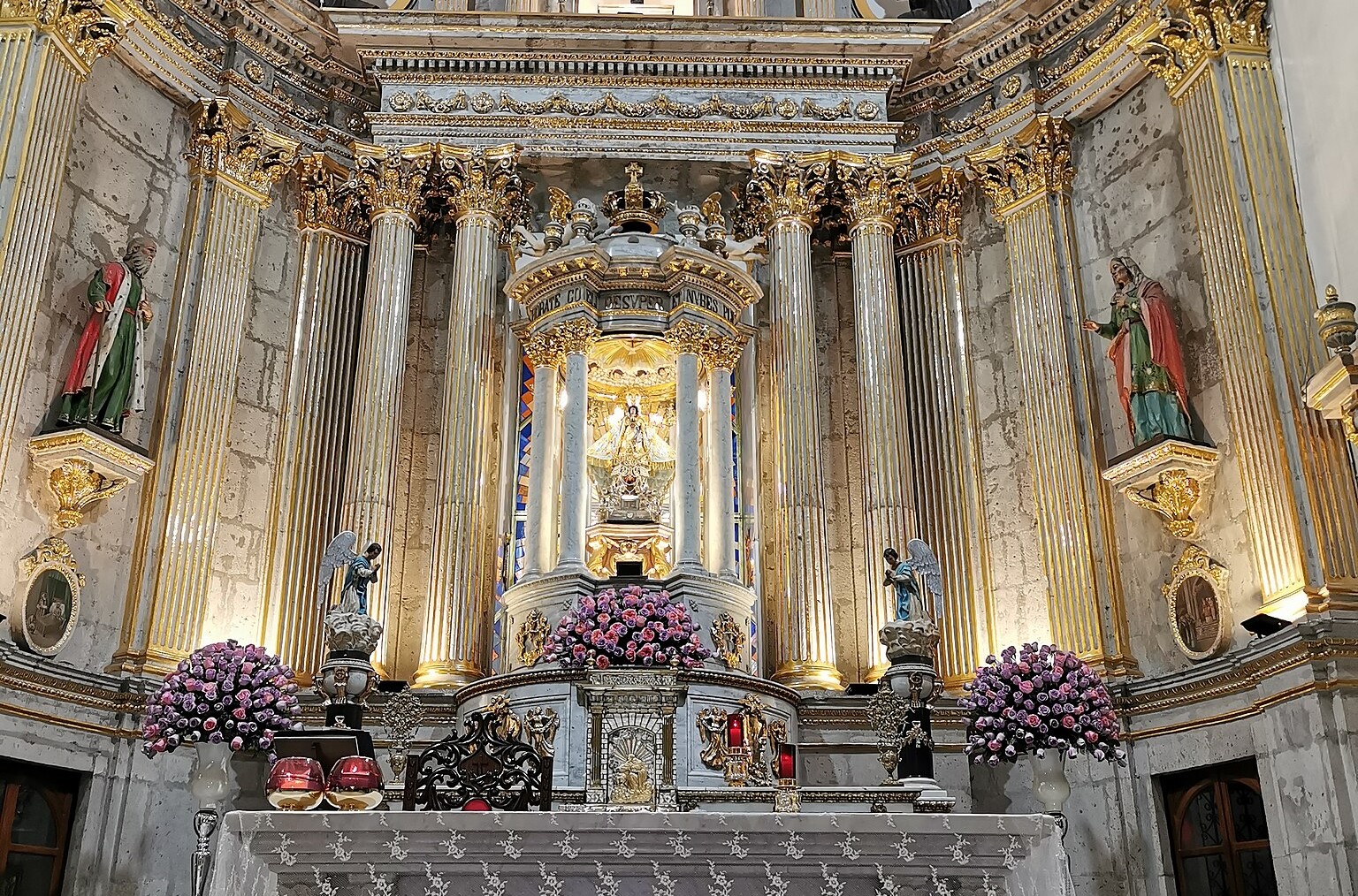
The interior has a calm elegance that contrasts with the ornate exterior. The main altar is made of Carrara marble imported from Italy, and at its center rises the Ciprés, the gilded tabernacle that houses the image of La Zapopanita, also of marble with silver and gold details. The side chapels are dedicated to different titles of the Virgin Mary and hold valuable 17th- and 18th-century paintings.
The complex does not end with the basilica: the adjoining Franciscan convent, where friars of the Order of Friars Minor are trained today, and the chapter house are part of the same historic ensemble. From the main plaza you can take in the full facade, especially at sunrise, when the golden light makes the cantera stone glow.
ℹ️ For architecture lovers: Visit the Basilica at 7:30 a.m., when it opens, before tour groups arrive. The morning light on the facade is spectacular and you will have the interior almost to yourself.
The Romería de Zapopan: UNESCO Intangible Cultural Heritage
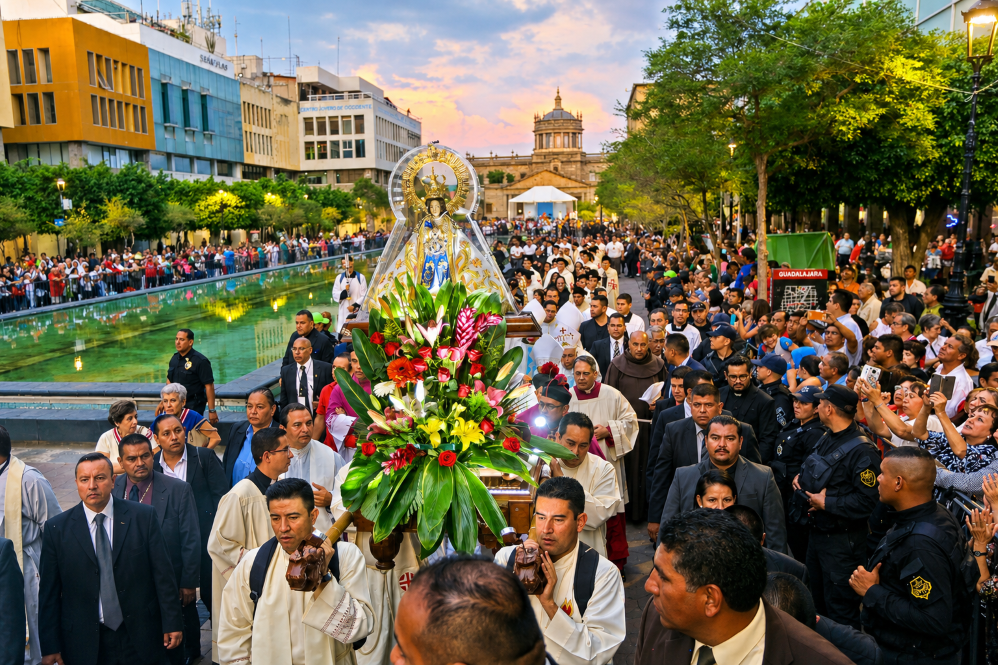
If one event defines the cultural identity of Guadalajara and Zapopan, it is the Romería of the Virgin of Zapopan (the annual pilgrimage), held every year on October 12. In 2018, UNESCO added the Romería to its Representative List of the Intangible Cultural Heritage of Humanity, recognizing that this tradition fosters social cohesion among millions of believers and preserves rituals of pre-Hispanic origin.
The Romería is the third most important religious pilgrimage in Mexico, after the Basilica of Guadalupe and the Shrine of Los Remedios. Its scale is extraordinary: more than two million people accompany the Virgin on her return to Zapopan from the Guadalajara Cathedral. The route covers about 9 kilometers (5.6 miles) along the metro area’s main avenues, with columns of dancers, chirimía (traditional reed pipe) musicians, floats and a sea of worshippers moving forward for hours.
What makes the Romería unique is the diversity of its participants: Indigenous dance groups in pre-Hispanic costumes, brass bands, scout troops, religious brotherhoods and pilgrims on bicycles, in wheelchairs, barefoot or on their knees. Each group expresses its devotion in its own way, blending Catholic practice with cultural elements from its home community.
ℹ️ Romería 2026: The Romería takes place on October 12 every year. If you plan to attend, arrive at the Guadalajara Cathedral hours in advance to see the Virgin depart (~10 a.m.). The full procession lasts 6 to 8 hours. Bring water, comfortable shoes and light clothing.
La Llevada de la Virgen: The Ritual Cycle from May to October
The October 12 Romería is the high point of a much longer ritual cycle known as “La Llevada de la Virgen” (the Carrying of the Virgin), which runs from May to October each year. During this period, the image of La Zapopanita leaves the Basilica and visits more than 120 parishes, churches and chapels in the Guadalajara metro area, staying days or weeks at each one.
The tradition of La Llevada dates back to 1695, when Guadalajara suffered severe epidemics and floods. Church and civil authorities asked for the Virgin to be brought out of Zapopan, convinced of her power of intercession. The epidemics subsided, or so people believed at the time, and the custom took hold. In 1734, after new calamities, the practice was formalized as a mandatory annual cycle.
For the residents of each parish she visits, receiving La Zapopanita is cause for a major local celebration. Families decorate their homes with papel picado (cut-paper banners) and flowers, neighborhoods organize kermeses (charity fairs) and special Masses, and the image is welcomed with fireworks, music and dancing.
Video Mapping on the Basilica’s Facade: The Friday and Saturday Show
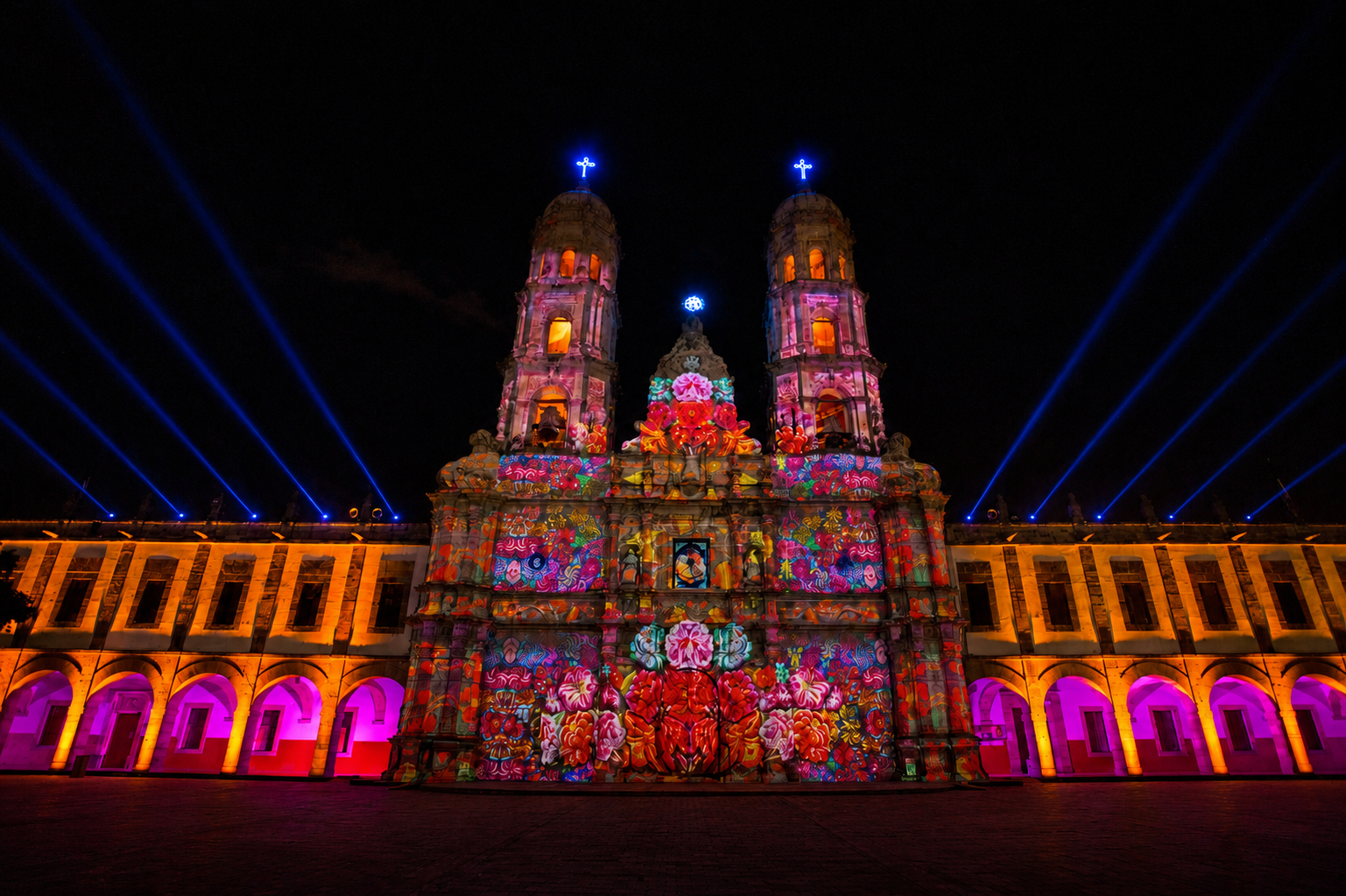
Few visitors know that the Basilica of Zapopan offers a nighttime experience you should not miss: Video Mapping, a light and sound show projected directly onto its main facade. Every Friday and Saturday at 9:00 p.m., the church’s cantera stone becomes a giant screen that tells, in three dimensions, the history of Zapopan, the legend of the Virgin and the municipality’s cultural identity.
The projection lasts about 20 minutes and uses the building’s real architecture as part of the set: the towers transform, the portal comes alive with animations and the carved stone reliefs light up in changing colors that create a surprising illusion of depth. The show is completely free and is best enjoyed from the plaza in front of the Basilica, which fills with families, tourists and residents every weekend.
ℹ️ Basilica of Zapopan Video Mapping: Fridays and Saturdays at 9:00 p.m. · Free admission · Length: ~20 minutes · Arrive 15 minutes early to get a good spot in the plaza · Not held during special religious events (check @BasilicadeZapopan)
Andador 20 de Noviembre and Downtown Zapopan: Things to Do Nearby
The area right around the Basilica of Zapopan is one of the best-preserved and liveliest historic centers in the metro area. Andador 20 de Noviembre is the pedestrian street that links the Basilica with the MAZ and a string of cafés, restaurants, ice cream shops and craft stores that invite you to stroll at an easy pace. It is the perfect place to have a coffee, try tortas ahogadas or sit and watch people go by while you take in the local atmosphere.
Plaza de las Américas, a few blocks away, offers another view of downtown Zapopan: antojitos (snack) stands, street vendors and everyday life in the municipality without a tourist filter. On weekends, the nearby Mercado El Chorrito is the best place for a breakfast of birria, pozole or menudo before you visit the Basilica. See also our guide to things to do in Guadalajara to plan the rest of your visit to the metro area.
If you have more time, downtown Zapopan has other treasures: the Templo de San Pedro Apóstol, the Capilla de Santa Ana Tepetitlán and several murals that tell the municipality’s history. The neighborhood has a pleasant, human scale that contrasts with the crowds of downtown Guadalajara, so it is ideal for exploring on foot without rushing.
How to Get to the Basilica of Zapopan from Guadalajara
The Basilica of Zapopan is in the heart of Zapopan’s historic center, about 12 kilometers (7.5 miles) from the Guadalajara Historic Center. It is easy to reach from anywhere in the metro area.
By Uber or taxi: The most convenient option. From downtown Guadalajara, the trip takes 20 to 30 minutes depending on traffic and costs about MXN $90-$130 by Uber. From Tlaquepaque or Tonalá, allow 30 to 45 minutes.
By public transportation: From downtown Guadalajara, bus routes 15, 24 vía Magdalena, 631, 631A, 634 and 635 connect with downtown Zapopan. The buses drop passengers off very close to the Basilica. The fare is MXN $9.50. Check Google Maps for the most convenient route from your starting point.
By SITREN (suburban rail): The SITREN Zapopan line connects several stations in the municipality. Combined with a short bus ride or a walk, it is a cheap, quick option from the north side of Guadalajara.
Rental car: If you are spending several days in Guadalajara, Zapopan and the rest of the metro area, a rental car is a good way to get around. Contrary to what many people think, it is an affordable option and offers excellent value for the convenience. Companies such as Veico Car Rental offer quality cars and prices with no hidden fees.
Private transportation: If you are looking for a more premium way to travel, consider Rapivan’s private and executive transportation in Guadalajara. Although the price is higher, the quality of the vehicles and the professionalism and punctuality of the drivers lead many travelers to choose this option.
ℹ️ Basilica of Zapopan — 2026 Visitor Information: Eva Briseño 152, Col. Centro, Zapopan, Jalisco · Mon-Sun: 7:30 a.m.-9:00 p.m. · Free admission · Phone: (33) 3633-6614 · Mass Mon-Sat: 7, 8, 9 and 11 a.m., 12, 1 and 8 p.m. · Mass Sun: every hour from 6 a.m. to 9 p.m.
Tips for Visiting the Basilica of Zapopan
The best time to visit is on a weekday morning (Tuesday to Thursday, 8 to 11 a.m.), when there are fewer visitors and you can take in the interior calmly. On weekends and religious holidays the church can be very crowded.
Dress code: The Basilica is an active place of worship. Visitors are asked to dress respectfully, covering shoulders and knees. Avoid low-cut tops or very short shorts. Photography is allowed inside as long as you don’t interrupt Mass or use flash near the altar.
Combine your visit: Plan at least half a day for the whole area. Basilica (1 hour) + Museo Huichol (45 min) + MAZ (1 hour) + Andador and a meal (1 hour) = a well-rounded cultural afternoon. On a Friday or Saturday, stay until 9 p.m. for the Video Mapping.
Accessibility: The Basilica has access ramps for people with limited mobility. Zapopan’s historic center is mostly flat, and the pedestrian Andador is in good condition for wheelchairs.
Frequently Asked Questions About the Basilica of Zapopan
How much does it cost to visit the Basilica of Zapopan?
Admission to the Basilica of Zapopan is completely free. It is open Monday to Sunday from 7:30 a.m. to 9:00 p.m. The adjoining Museo Huichol accepts donations.
What are the Mass times at the Basilica of Zapopan?
Monday to Saturday, Mass is held at 7:00, 8:00, 9:00 and 11:00 a.m., 12:00, 1:00 and 8:00 p.m. On Sundays there is Mass every hour from 6:00 a.m. to 9:00 p.m. Check the Basilica’s official social media, since times may change on special dates.
What is the Romería de Zapopan and when is it?
The Romería de Zapopan is the annual pilgrimage in which more than two million people accompany the Virgin of Zapopan on her return to the Basilica from the Guadalajara Cathedral. It takes place every October 12 and was declared Intangible Cultural Heritage of Humanity by UNESCO in 2018. It is the third most important religious pilgrimage in Mexico.
What is “La Llevada de la Virgen”?
La Llevada is the ritual cycle between May and October during which the image of the Virgin of Zapopan leaves the Basilica to visit more than 120 parishes and chapels in the Guadalajara metro area. Each church hosts La Zapopanita for a few days and organizes special festivities. The cycle ends with the October 12 Romería.
What else is there to see in downtown Zapopan besides the Basilica?
Downtown Zapopan offers a full cultural outing: the Museo Huichol Wixárika (Indigenous art, by donation), the MAZ Museo de Arte de Zapopan (contemporary art, free), Andador 20 de Noviembre with its cafés and restaurants, and the Video Mapping show on the Basilica’s facade (Fridays and Saturdays at 9:00 p.m., free).
How do you get to the Basilica of Zapopan from downtown Guadalajara?
From downtown Guadalajara you can take an Uber (~MXN $100-130, 20-30 min) or public transportation on routes 15, 24, 631, 631A, 634 or 635 (MXN $9.50, 30-40 min). The exact address is Eva Briseño 152, Centro Zapopan.
Why is the Virgin of Zapopan called “Generala”?
The Virgin of Zapopan received the title of General of the Mexican Armies because of her reputed miraculous intervention in historic battles in the region. The title is reflected in her attire: she wears a sash across her chest and a sword, symbols of military rank. She is also known as Queen of Zapopan and Guadalajara, for the keys to both cities that she holds.
The Basilica of Zapopan: More Than a Place of Faith
The Basilica of Zapopan is much more than a church. It is a living record of colonial history, a stage for unique cultural traditions, a meeting point between Indigenous and Catholic traditions and the spiritual center of a city with a strong pulse. Whether you come out of devotion or out of interest in history or architecture, a visit to this shrine will be one of the most memorable moments of your time in Guadalajara.
Plan your visit by combining the Basilica with the Museo Huichol, the MAZ and an afternoon on the pedestrian Andador. If you are lucky enough to be in Guadalajara on October 12, the Romería is an experience no other destination in Mexico can match. See also things to do in Guadalajara to make the most of your visit to the Pearl of the West. And if you are traveling with family, don’t miss our guide to Guadalajara for kids with the city’s best family activities.